School Fee Collection with EcoCash: Why Zimbabwean Schools Collect the Money but Lose the Plot
Walk into almost any school office in Harare or Bulawayo during the first week of term and you'll see the same scene: a queue of parents holding phones, a bursar holding a notebook, and somewhere between the two,…
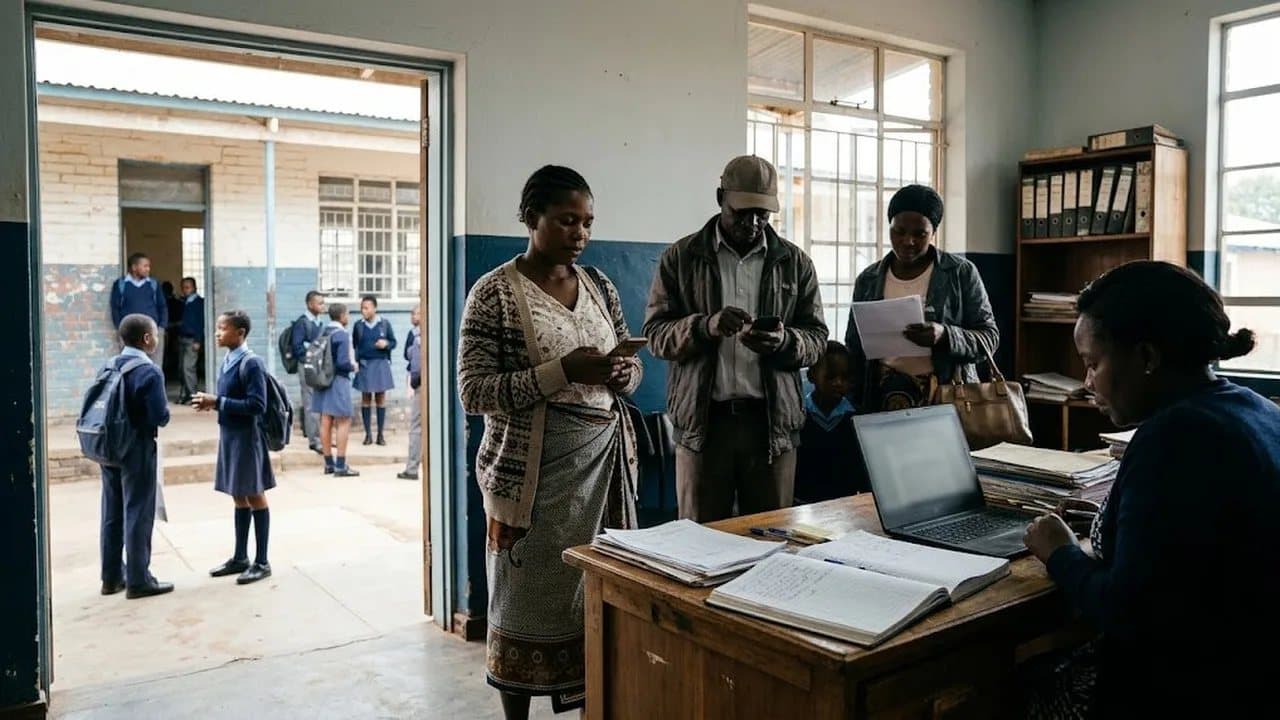
Walk into almost any school office in Harare or Bulawayo during the first week of term and you'll see the same scene: a queue of parents holding phones, a bursar holding a notebook, and somewhere between the two, money quietly going missing — not stolen, just lost in translation.
Zimbabwe's schools have largely won the battle to get paid digitally. EcoCash, Omari, InnBucks, ZIPIT, bank transfers — parents now have more ways to pay fees than ever, and schools from Arundel to rural mission schools in Mavuradonha have publicly embraced mobile money. Newsday reported schools across the country adopting EcoCash as a payment platform years ago, and today a school that only takes cash is the exception, not the rule.
So why are so many bursars still working weekends?
Because collection was never the hard part. Reconciliation is. And that's the part almost nobody talks about.
The Uncomfortable Truth: EcoCash Solved the Parent's Problem, Not the School's
From the parent's side, paying fees by EcoCash is genuinely brilliant. No bus fare into town, no queuing at the bank, no carrying USD notes through a kombi rank. Bill payments for school fees typically carry no charge to the customer, and payment takes thirty seconds from a kitchen in Kuwadzana or a work site in South Africa.
From the school's side, here's what actually arrives: a line on a merchant statement that says something like TX48291077 – J MOYO – 150.00.
Now the questions begin:
- Which J Moyo? The school has four.
- Which child? She has two at the school.
- Which term? He's paying off last term's arrears and part of this term.
- Which currency was the fee quoted in — and what rate applies today?
Multiply that by 600 pupils, three payment platforms, two currencies, and a term's worth of transactions, and you understand why "we take EcoCash" and "we know who has paid" are two very different statements.
The digital payment revolution moved the bottleneck. It didn't remove it.
Where the Money Actually Leaks
Talk to bursars honestly and the same four leaks come up again and again.
1. The identification gap
Mobile money references are free-text. Parents pay from a grandmother's line, an uncle's line, a work colleague's line. The name on the transaction often has no relationship to the pupil the payment is for. Every unmatched payment becomes a phone call, a WhatsApp message, or — worst case — a parent standing in the office in October with a screenshot from February, insisting they paid.
Without a system that ties every transaction to a pupil account at the moment of capture, the school is running a detective agency alongside a school.
2. The dual-currency trap
This one is uniquely Zimbabwean. A school quotes fees in USD. A parent pays the ZiG equivalent through EcoCash. At what rate? The interbank rate on the day of payment? The rate on the invoice date? A school-set rate from the start of term?
If the school doesn't fix and document its policy — and apply it consistently — every ZiG payment becomes a small negotiation, and small negotiations across hundreds of pupils add up to real money. Schools that use a live, verifiable reference rate (this is exactly what ZimRate exists for — free, live USD/ZiG rates with an open API) can point to an objective number instead of arguing with parents rate by rate. Schools that don't are quietly absorbing exchange losses every single day, or quietly overcharging parents and eroding trust.
3. The receipt problem
Paper receipt books are still standard in a shocking number of schools. They get lost, they get damaged, and — let's be direct — they get forged. Zimbabwean school software vendors now advertise QR-coded, verifiable receipts precisely because fake receipts are a known, live problem. If your receipting is manual, your audit trail is a suggestion.
4. The arrears fog
The most expensive leak isn't fraud. It's fog. When a bursar can't produce a real-time list of exactly who owes what, the school can't chase arrears early, can't apply payment plans consistently, and can't forecast cash flow for the term. Debts that would have been recoverable in week three become write-offs by week twelve. In a sector where many schools run on margins thinner than a exercise book cover, that fog is the difference between paying teachers on time and not.
What "Good" Looks Like in 2026
Here's the standard every Zimbabwean school — government, mission, trust, or independent — should now hold itself to. None of this is futuristic. All of it is available locally, today.
Every payment lands on a pupil account automatically. Whether it came through EcoCash, bank transfer, card, or cash at the office, the payment is captured once, attached to a specific pupil, and reflected in the parent's balance immediately. No notebook. No end-of-month matching marathon.
Every receipt is digital and verifiable. The parent gets an instant receipt (SMS, WhatsApp, or email). The school gets an immutable record. Nobody's term hinges on a carbon-copy book surviving the rainy season.
Currency policy is explicit and automated. The school decides its USD/ZiG rate policy once, configures it, and the system applies it to every transaction. Parents can be shown the reference rate used. Disputes drop to near zero because the rule is visible and consistent.
Arrears are a live report, not an archaeology project. The head can open a dashboard on Monday morning and see: total collected this term, outstanding by grade, pupils above the arrears threshold, and a trend line against last term. Follow-up letters and payment-plan conversations happen in week three, not week ten.
Finance data talks to academic data. Fee status, enrollment, class lists, and reporting live in one system — because in reality, "can this child sit for exams" and "has this account been settled" are the same conversation.
"But We're Fine With Our Spreadsheet"
Every school that eventually modernises says this first, so let's take it seriously.
A spreadsheet plus a diligent bursar can work — for a small school, in a single currency, with one payment channel, and zero staff turnover. The problem is that none of those conditions describe Zimbabwe in 2026. The moment you add EcoCash and bank transfers and USD and ZiG and a bursar who goes on leave, the spreadsheet stops being a system and becomes a single point of failure with formatting.
The real cost of the spreadsheet isn't the errors you catch. It's the ones you never see: the payment credited to the wrong pupil, the rate applied inconsistently, the arrears letter that never went out because the balance looked fine. Schools don't lose money in one dramatic incident. They lose it in a hundred invisible ones, every term.
And there's a trust dimension. Parents who pay instantly by EcoCash and then wait three days for the school to "confirm receipt" draw an obvious conclusion about how well that school is run. In a competitive enrollment environment — and make no mistake, Zimbabwean parents shop around — administrative competence is part of your reputation.
The Way Forward for Heads and Bursars
If you run a school, here's a practical sequence — no consultants required:
- Audit one month of payments. Take last month's EcoCash and bank statements and try to match every transaction to a pupil. Time yourself. The hours you burn and the orphan payments you find are your business case.
- Write down your currency policy. One paragraph: which rate, from which source, applied when. Publish it to parents. If you need a neutral reference, ZimRate's live rates are free.
- Kill the paper receipt book. Move to digital receipts with verification. This single change closes your biggest fraud door.
- Put fees on a proper school system. Not a generic accounting package — a school ERP built for Zimbabwean realities: multi-currency fees, EcoCash and bank payment capture, pupil-level ledgers, arrears reporting, and parent communication in one place.
That last step is where ZimSchool comes in. It was built in Zimbabwe, for Zimbabwean schools: pupil accounts that reconcile payments automatically, USD/ZiG handling backed by live ZimRate data, verifiable digital receipting, and real-time arrears dashboards your head can actually read. It handles the boring, brutal administrative plumbing so your bursar can manage money instead of hunting it.
The Bottom Line
EcoCash and mobile money genuinely transformed how Zimbabwean parents pay school fees — that revolution already happened, and schools were right to embrace it. But collection without reconciliation is half a system, and the half that's missing is the half that protects your revenue, your audit trail, and your parents' trust.
The schools that thrive over the next five years won't be the ones that merely accept digital payments. They'll be the ones that can answer, at any moment, the only question that matters: who has paid, who hasn't, and what are we doing about it?
If your school can't answer that in under a minute, it's time to fix the plumbing.
Book a free demo of ZimSchool → — see your own fee data reconciled, in both currencies, on one dashboard.