Still Running Your Business on Spreadsheets? Here's What It's Actually Costing You
Let's be honest. If you run a business in Zimbabwe — a tuckshop in Mbare, a hardware store in Bulawayo, a restaurant in Borrowdale, a school in Masvingo — there's a very good chance your "system" is a collection of…

Let's be honest. If you run a business in Zimbabwe — a tuckshop in Mbare, a hardware store in Bulawayo, a restaurant in Borrowdale, a school in Masvingo — there's a very good chance your "system" is a collection of Excel files, WhatsApp messages, and handwritten notebooks.
You're not alone. Research from the University of Bindura found that the majority of Zimbabwean SMEs don't keep complete accounting records, and those that do often rely on spreadsheets with no real structure. The SME Association of Zimbabwe represents over 3.5 million small businesses — and most of them manage their operations with tools that were never designed for the job.
Here's the uncomfortable truth: that spreadsheet isn't saving you money. It's quietly bleeding you dry.
The 90% Problem: Your Spreadsheet Almost Certainly Has Errors
Studies have consistently shown that nearly 90% of spreadsheets contain mistakes. Not complex formulas gone wrong — simple typos, copy-paste errors, a row accidentally deleted while scrolling on your phone.
Think about what that means for a Zimbabwean business owner. Your stock count says you have 47 bags of cement. You actually have 39. A customer comes in, you promise delivery, and then you're scrambling to find stock that doesn't exist. You lose the sale. You lose the customer. You lose referrals.
Now multiply that across every product you carry, every day, for months. Those "small" errors compound into real money — money you can't trace because the same spreadsheet that created the problem is the one you're using to track it.
In Zimbabwe's tight economy, where margins are already thin and every dollar (or ZiG) counts, spreadsheet errors aren't a minor inconvenience. They're a business risk.
The Hours You'll Never Get Back
Here's a question: how many hours per week do you spend updating spreadsheets?
If you're like most small business owners, the answer is somewhere between "too many" and "I've lost count." Entering sales data manually. Cross-referencing stock lists. Copying numbers from one sheet to another. Fixing formulas that broke when someone added a row in the wrong place.
A shop owner in Harare recently told us he spends roughly two hours every evening reconciling his day's sales in Excel. That's 14 hours a week — nearly two full working days — spent on data entry that modern POS software handles automatically in real time.
Those 14 hours could go toward serving customers, negotiating with suppliers, marketing the business, or simply going home to the family. Instead, they go toward maintaining a system that's one accidental keystroke away from disaster.
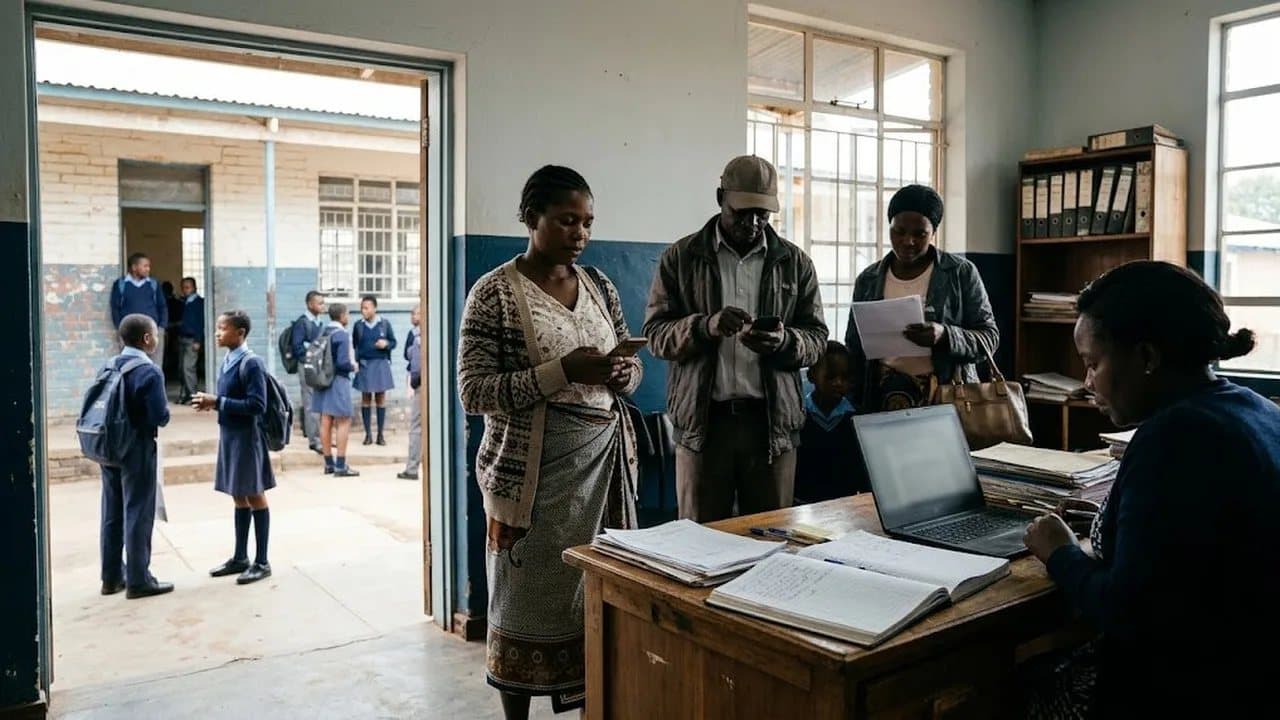
For schools, the problem is even worse. Administrators tracking fee payments, student records, exam results, and staff attendance across multiple spreadsheets often spend entire weekends just getting the numbers to match. When parents call to ask about their child's balance, the answer is "let me check and call you back" — because the spreadsheet is on someone else's laptop.
The Multi-Currency Nightmare
If there's one thing that exposes the limits of spreadsheets, it's Zimbabwe's multi-currency environment.
Your business probably deals in both USD and ZiG. Prices change. Exchange rates fluctuate daily. A customer pays in ZiG for a product priced in USD, and suddenly you need to calculate the conversion, record it accurately, update your revenue figures, and make sure your end-of-month reporting reflects the right amounts in the right currencies.
In a spreadsheet, this is a manual nightmare. You're looking up today's rate (where? On which platform? Is it the interbank rate or the parallel rate?), punching in formulas, and hoping you remember to update them tomorrow when the rate shifts.
Proper business software handles this automatically. At Statotech, our POS system integrates with ZimRate — Zimbabwe's most comprehensive live exchange rate platform — to pull current rates in real time. No manual lookups. No stale formulas. No guesswork.
That's not a luxury feature. In an economy where the USD/ZiG rate can move significantly in a single week, it's a necessity.
"But Software Is Expensive"
This is the objection we hear most often. And ten years ago, it might have been valid. Enterprise software used to cost thousands of dollars, require dedicated servers, and need an IT team to maintain.
That world is gone.
Today, cloud-based business software designed for the Zimbabwean market costs a fraction of what you'd lose to spreadsheet errors in a single month. Statotech POS is built specifically for Zimbabwean businesses — it handles multi-currency, works with EcoCash and mobile payments, generates ZIMRA-compliant receipts, and runs on the devices you already own.
For schools, ZimSchool replaces that tangle of spreadsheets for fees, attendance, results, and parent communication with one integrated system. No more "let me check and call you back."
For restaurants, MenuWise replaces printed menus and WhatsApp orders with a professional QR digital menu that updates instantly when prices or dishes change.
For clinics, Statotech Health is completely free — because we believe basic healthcare management shouldn't be a cost barrier.
The real question isn't "can I afford software?" It's "can I afford to keep losing money, time, and customers to spreadsheets?"
What You Actually Lose Without Proper Software
Let's put it in concrete terms. Here's what spreadsheet-dependent businesses typically lose that they never see on a balance sheet:
Stock shrinkage you can't detect. Without real-time inventory tracking, you don't know what's walking out the door — whether through theft, spoilage, or simple miscounting. A POS system tracks every item in and out, automatically.
Customers who don't come back. When checkout is slow because you're manually looking up prices, when you can't tell a customer if something is in stock, when your restaurant menu has last month's prices — customers notice. They just don't tell you. They tell their friends.
Decisions based on feelings instead of data. Which product is your best seller? Which day of the week has the highest revenue? Which school term has the most fee defaults? If you're running on spreadsheets, you're guessing. Business software gives you dashboards and reports that answer these questions in seconds.
ZIMRA compliance headaches. Zimbabwe's tax authority is increasingly requiring electronic records and fiscal device compliance. A spreadsheet won't generate a ZIMRA-compliant receipt. A proper POS system will — and it keeps your records audit-ready.
Staff time that could be productive. Every hour your staff spends on manual data entry is an hour they're not selling, teaching, treating patients, or serving customers.
The Transition Is Easier Than You Think
The biggest barrier to switching isn't cost — it's fear. Fear that the transition will be complicated. Fear that staff won't learn the new system. Fear that everything will break during the switch.
Here's what actually happens: most businesses are fully operational on Statotech software within a day. The systems are designed for Zimbabwean business owners — not IT professionals. If you can use WhatsApp, you can use our POS. Your existing data can be imported, and our support team walks you through every step.
You don't have to throw away your spreadsheets overnight. Start with one function — say, sales tracking — and let the software prove itself. Once you see your daily reconciliation happen automatically instead of taking two hours, you'll wonder why you waited.
The Bottom Line
Spreadsheets were revolutionary in 1985. They're still useful for personal budgets and one-off calculations. But running a business on them in 2026 — especially in Zimbabwe's complex, multi-currency, increasingly regulated economy — is like using a paper map when you have GPS on your phone. It technically works. It just costs you more than you realise in time, money, and missed opportunities.
The businesses that will thrive in Zimbabwe over the next decade aren't the ones with the most capital or the best locations. They're the ones that use the right tools to make faster decisions, serve customers better, and stop losing money to problems they can't even see.
Your spreadsheet can't show you what you're losing. The right software can.
Ready to see what you've been missing? Explore Statotech POS for retail, ZimSchool for education, MenuWise for restaurants, or Statotech Health for clinics. Built in Zimbabwe, for Zimbabwe.