Why Zimbabwean Schools Are Still Running on Paper (And What It's Costing Them)
With 11,000+ schools serving nearly 7 million students, Zimbabwe's education sector runs on exercise books, spreadsheets, and prayer. It doesn't have to.
With 11,000+ schools serving nearly 7 million students, Zimbabwe's education sector runs on exercise books, spreadsheets, and prayer. It doesn't have to.
The Filing Cabinet Is Full. The Patience Is Empty.
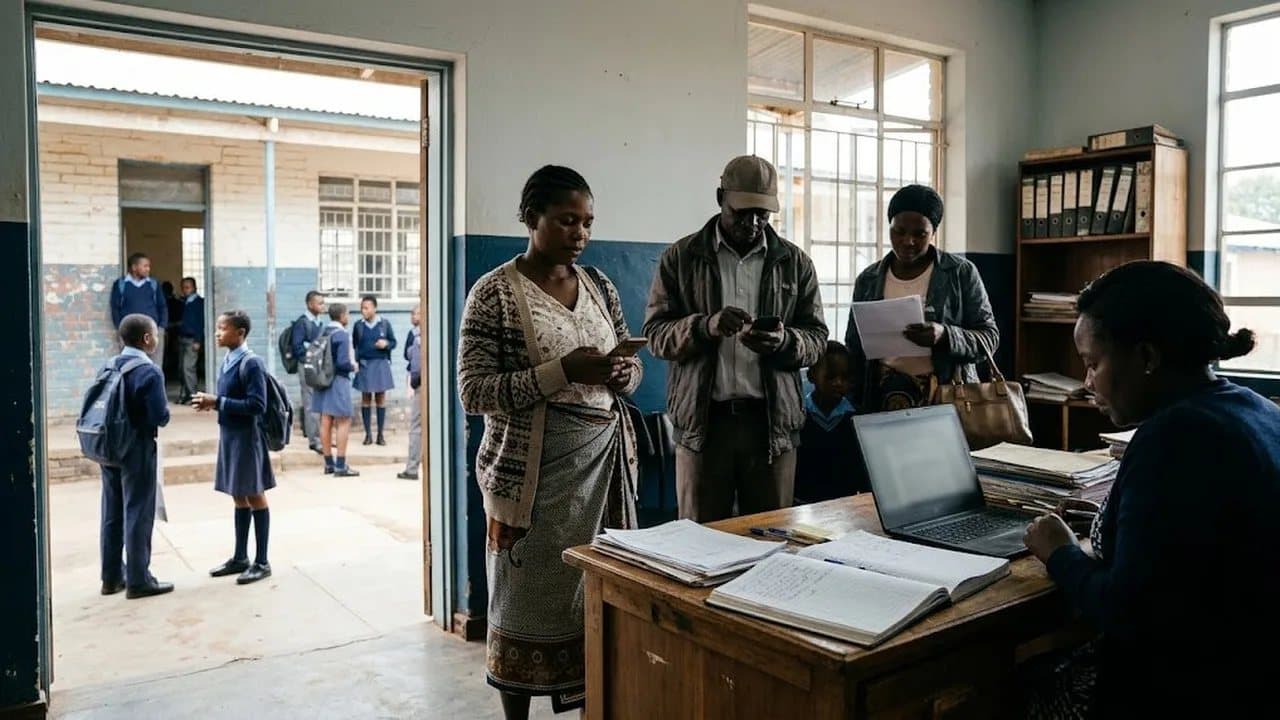
It's the first week of term at a private school in Harare. The bursar's desk is buried under a stack of receipt books, printouts of bank deposits, a WhatsApp group with 400 unread messages from parents asking about fee balances, and a half-finished Excel spreadsheet that crashed twice yesterday.
A parent walks in wanting to know exactly how much they owe for Term 2 — in USD and in ZiG. The bursar flips through three different ledgers, cross-references a bank statement, and gives an answer she's about 80% confident in. The parent disputes it. Neither of them can prove who's right.
This scene plays out at thousands of schools across Zimbabwe every single term. And the cost — in lost revenue, wasted time, and broken trust — is far higher than most school administrators realise.
Zimbabwe's School System by the Numbers
Zimbabwe's education sector is massive and growing. The country has over 11,371 functional schools serving approximately 6.69 million school-age children. The private sector alone accounts for 3,853 schools, with individual-owned primary and secondary schools multiplying rapidly as parents seek alternatives to underfunded public institutions.
More schools means more students, more fees, more records, more reports, and more administrative complexity. Yet the tools most schools use to manage all of this haven't changed in decades.
The contrast is striking: a sector growing in size and ambition, still managed with the administrative technology of the 1990s.
Where Paper Systems Actually Break Down
Paper-based school administration isn't just old-fashioned — it's actively costing schools money, time, and credibility. Here's where the damage is worst.
1. Fee Collection and Tracking
This is the big one. Fee collection is the financial lifeline of every school, yet most schools track it with a combination of receipt books, bank statements, and spreadsheets that nobody fully trusts.
The multi-currency dimension makes it worse. With Zimbabwe's dual USD/ZiG system, schools need to track payments in multiple currencies, apply the correct exchange rate at the time of each payment, and reconcile everything at the end of the month. Some schools have been caught charging parents using street rates rather than official rates — not always by design, but because their "system" (a notebook and a calculator) doesn't track rates at all.
In 2024, the government had to deploy ZACC, the Reserve Bank, and the police to enforce ZiG acceptance at schools. Some institutions openly admitted their accounting systems weren't configured for ZiG. When your "system" is a spreadsheet, configuring it for a new currency means rebuilding it from scratch.
A school with 500 students, each paying fees across three terms in two currencies, generates at least 3,000 payment records per year — before accounting for instalment plans, partial payments, and refunds. Tracking that on paper isn't just difficult. It's fiction.
2. Student Records and Reporting
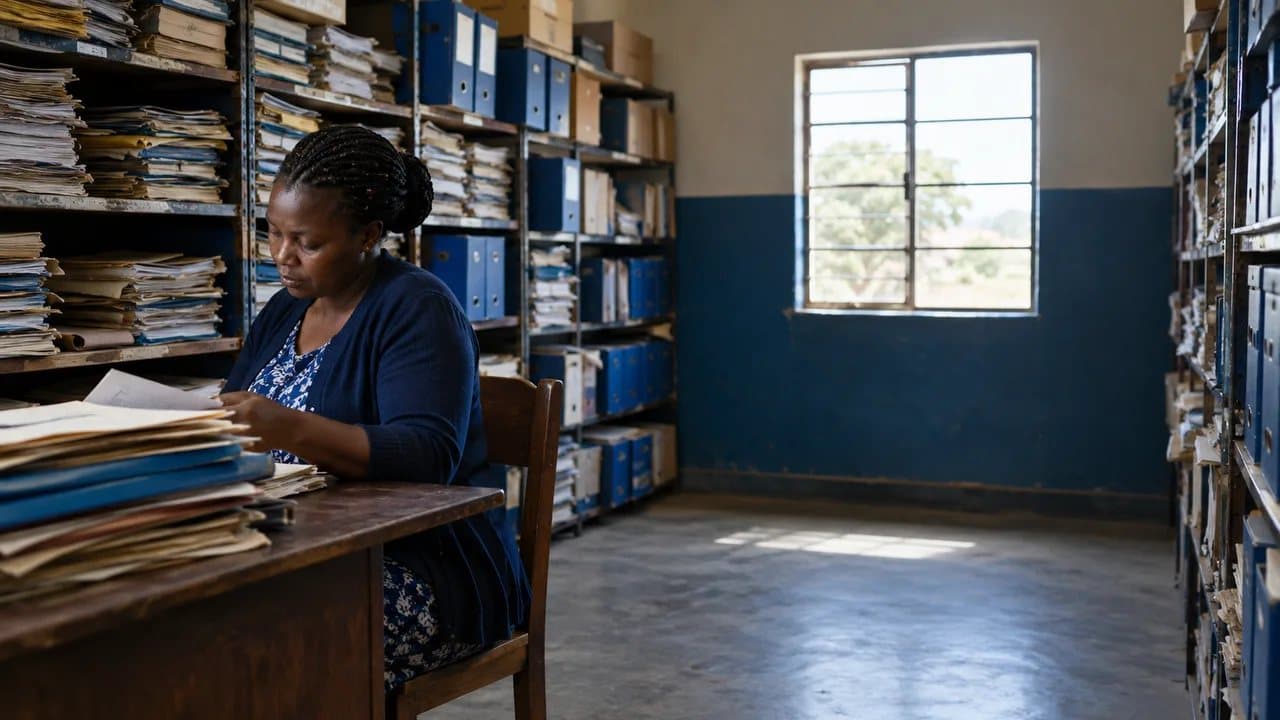
End-of-term reports are a production. Teachers fill in marks on paper forms. Someone types them into a template. Someone else checks the totals. The principal signs off. Parents collect physical copies — and when they inevitably lose them, the school has to dig through filing cabinets (if the records were filed properly) or regenerate them from memory.
For schools running the Zimbabwean curriculum, reporting requirements include continuous assessment records, ZIMSEC exam entries, and compliance documentation. Assembling all of this from paper records means that every reporting cycle consumes weeks of staff time that could be spent on teaching.
3. Attendance and Compliance
The Ministry of Primary and Secondary Education requires attendance records. Schools need accurate headcounts for per-capita funding, staffing ratios, and regulatory compliance. Yet most schools track attendance in class registers that get lost, damaged, or filled in retroactively.
Research on Zimbabwe's satellite schools shows that Teaching Heads spend so much time on administrative duties — office work, visitor management, submissions to the Education Office — that they lose significant instructional time. Paper administration doesn't just waste admin time. It steals teaching time too.
4. Parent Communication
In the absence of a proper system, parent communication defaults to WhatsApp. Fee reminders, event notices, report distribution, emergency alerts — all jammed into group chats where important messages get buried under "Good morning" stickers and off-topic arguments.
WhatsApp works for casual conversation. It doesn't work as a school management platform. There's no record trail, no way to verify who received what information, and no integration with financial or academic records. When a parent asks "How much do I owe?", the bursar can't answer from WhatsApp — they have to go dig through the ledger.
5. Revenue Leakage You Can't See
Here's what keeps school owners up at night — or should. Paper systems create gaps that are nearly impossible to audit:
- Unrecorded payments: Cash received but not immediately receipted. Was it entered later? Was it entered correctly?
- Duplicate receipts: Two receipt books running simultaneously with overlapping numbers.
- Rate discrepancies: ZiG payments recorded at the wrong exchange rate, creating phantom shortfalls or surpluses.
- Missing students: A student enrolled midterm whose fees were partially collected but never properly tracked.
A school losing just 2% of revenue to administrative gaps on a $50,000-per-term fee roll is losing $1,000 every term — $3,000 per year — to problems that proper software eliminates overnight.
What School Management Software Actually Does
School management software isn't about replacing your bursar with a robot. It's about giving your bursar tools that match the complexity of the job.
Fees Made Simple — In Both Currencies
A proper school management system tracks every fee category, every payment (USD, ZiG, EcoCash, bank transfer), every instalment plan, and every outstanding balance — in real time. Parents can check their balance without calling the office. The bursar can generate a debtors' list in seconds, not hours. And when the exchange rate moves, the system adjusts automatically instead of requiring a manual spreadsheet rebuild.
Academic Records That Don't Disappear
Digital student records mean that marks, attendance, and reports live in a searchable database — not a filing cabinet. End-of-term reports generate automatically from captured marks. Historical records are accessible instantly. Transfer students arrive with portable academic histories instead of lost paper trails.
Attendance That Counts Itself
Digital attendance tracking captures data once and feeds it into every system that needs it — compliance reports, parent notifications, administrative dashboards. No duplicate entry. No class registers that vanish in March and resurface in November.
Communication That Actually Reaches Parents
Built-in messaging replaces the WhatsApp chaos with structured, trackable communication. Fee reminders go to the right parents at the right time. Report cards distribute digitally. Event notifications reach parents who opted in — with read receipts, not guesswork.
The Market Is Moving — With or Without You
Zimbabwe's school management software market is waking up. Locally built solutions like Sekani, Havano, and Fundah (already serving 20+ schools and 8,000+ students in Harare) are proving that Zimbabwean schools want modern tools — they just need ones built for local realities. International platforms like GeniusEdu and Smart School Manager are also entering the market.
The schools adopting these systems now aren't doing it because they're tech-savvy. They're doing it because parents are choosing schools that operate professionally — schools that send digital reports, offer online fee checking, and don't lose records between terms. In a market where 3,853 private schools compete for enrolment, operational professionalism is becoming a differentiator.
The question isn't whether school management software will become standard in Zimbabwe. It's whether your school will adopt it before or after your competitors do.
Stop Filing. Start Managing.
Every term your school runs on paper is a term of lost revenue, wasted hours, and unnecessary risk. The tools exist. They're built for Zimbabwe — for your curriculum, your fee structures, your currency realities. Many offer free tiers, so cost isn't the barrier.
The barrier is inertia. And inertia has a price.
Get Started — Free
Statotech Systems builds school management software designed for how Zimbabwean schools actually operate — not how a Silicon Valley developer imagines they might.
- ZimSchool — Student records, fee management, attendance, and reporting built for Zimbabwe's curriculum and multi-currency reality
- ZimRate — Free, live USD/ZiG exchange rates powering accurate fee calculations
- Statotech POS — Multi-currency point of sale for school tuckshops and bookshops
- MenuWise — QR digital menus for school dining facilities
Every product has a free tier. No credit card. No 14-day trial. Just software that works for your school.
Visit statotec.com to see the full suite.
Statotech Systems — Software that gets Zimbabwe.